No. You can build muscle without a single supplement. What drives muscle growth is consistent resistance training plus enough total protein each day, and the research is clear that the source of that protein barely matters. A large meta-analysis of 49 randomized trials found that the benefit of extra protein plateaus at about 1.6 grams per kilogram of body weight per day, and the benefit comes from hitting that total, not from powders specifically. Protein powder is a convenience product. It makes hitting your target easier. It does not contain anything your body cannot get from food.
That is the short answer. The rest of this article walks through what the research actually shows, where powders genuinely help, and why the industry wants you to think you need them.
What actually drives muscle growth?
Muscle growth, or hypertrophy, comes down to two things working together: a training stimulus and enough raw material to rebuild.
Every day your muscles are simultaneously building new protein (muscle protein synthesis) and breaking old protein down. When synthesis exceeds breakdown over time, you get net growth. Resistance training is the trigger that raises synthesis, and that raised state can last 24 to 48 hours after a session. Eating protein amplifies the response, because it supplies the amino acids the body uses as building blocks and flips on the signaling switch (the mTOR pathway) that tells cells to start building.
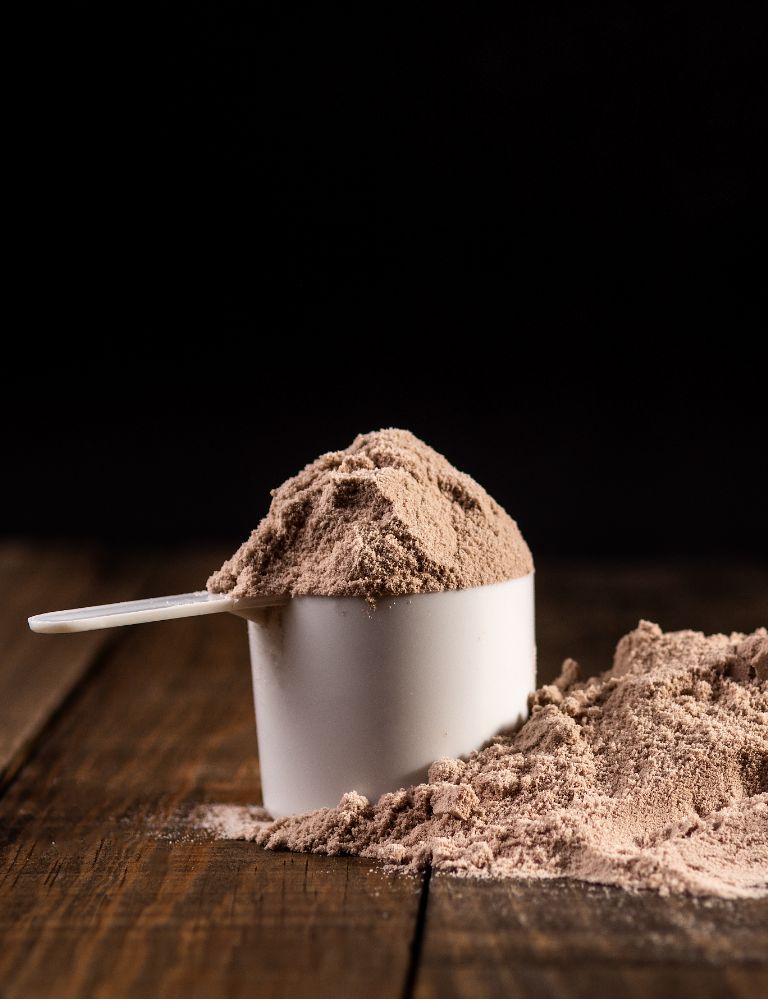
Here is the part the supplement ads skip: the switch is flipped by the amino acid leucine, which is abundant in ordinary foods like eggs, dairy, meat, and soy. A scoop of whey does not contain a special growth ingredient. It contains the same building blocks, in a convenient dry form.
How much protein do you actually need to build muscle?
This is one of the few fitness questions with a genuinely solid answer, thanks to a 2018 meta-analysis by Morton and colleagues published in the British Journal of Sports Medicine. It pooled 49 randomized controlled trials with 1,863 participants, all combining resistance training with protein supplementation, and asked where the gains stop increasing.
The findings were straightforward:
- Protein supplementation added, on average, 0.30 kg of fat-free mass and 2.49 kg on one-rep max strength compared with a placebo.
- The fat-free mass benefit plateaued at a total daily intake of 1.62 grams per kilogram of body weight per day (the upper end of the confidence interval reached 2.2 g/kg/day).
- Beyond that level, more protein produced no statistically significant further gains in lean mass.
So for an 80 kg person, that lands at roughly 130 g of protein per day, with anything above about 175 g unlikely to add anything. A separate dose-response meta-analysis by Tagawa and colleagues, pooling 105 trials and 5,402 participants, found the same shape: the benefit per extra gram was steepest up to about 1.3 g/kg/day and flattened noticeably above it, consistent with a practical ceiling in the 1.6 to 2.2 g/kg/day range.
Notice what none of this says: nothing about powder. The studies manipulated total protein intake, however the participants got it. Your muscles do not ask for a receipt showing the protein came from a shaker bottle.
Can you get that much protein from food alone?
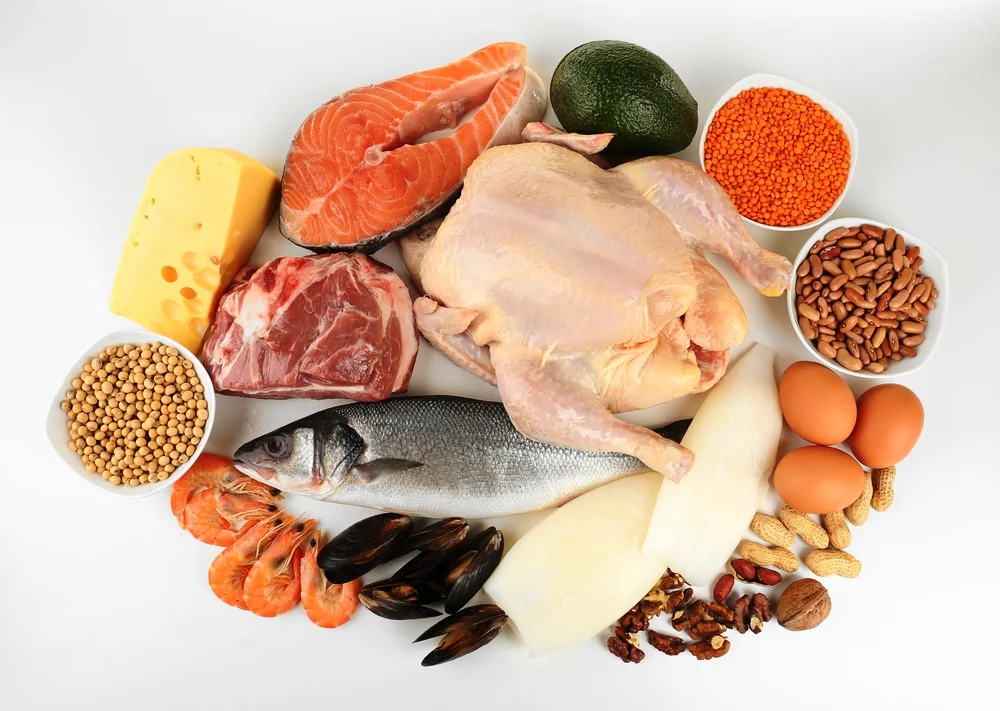
Yes, for most people. Dr. Dominique Condo, a senior lecturer in sports nutrition at Deakin University, puts it plainly: “Protein powders are a really convenient way to get in the right type of protein, but they shouldn’t replace a really good diet and are not essential to gain muscle.”
Her rule of thumb is 30 to 40 grams of protein per meal, spread across four or five meals and snacks through the day rather than loaded into one big dinner. A 100 g serving of meat, a small can of tuna, a grilled chicken breast, or a few hard-boiled eggs each cover roughly that per-meal amount. Other everyday high-protein foods include fish, Greek yogurt, milk, lentils, beans, and nuts.
One nuance worth knowing: Dr. Condo’s claim that the body can only use 30 to 40 g of protein per meal for muscle building reflects the older “muscle full” idea, which newer research has complicated. A 2023 study by Trommelen and colleagues in Cell Reports Medicine gave participants 0, 25, or 100 g of milk protein after a full-body workout and found the 100 g dose correlated with about 19% higher muscle protein synthesis in the first four hours and 30% higher over 12 hours. The “your body can only use 30 grams at once” myth is dead. But the practical takeaway has not changed: spread your protein across the day, hit your daily total, and the exact per-meal math matters far less than the marketing suggests.
What does a protein powder give you that food does not?
Honestly? Mostly convenience and speed. A shake takes 30 seconds to make. Cooking a chicken breast does not. For someone who trains early, eats at a desk, or simply struggles to prepare enough protein-rich meals, a scoop of whey fills the gap.
That is the legitimate use case, and Dr. Condo names it directly: “If your schedule is so busy that you struggle to prepare enough protein-rich meals and snacks, protein supplements can fill the gaps.”
What powder does not give you is everything else food contains. Whole foods bring micronutrients, fiber, and fats that isolated powder lacks, and they keep you fuller for longer. Dr. Condo’s guidance is “food first always,” because the definition of a supplement is something that supplements the diet, not replaces it. A diet built on shakes with real food as an afterthought is worse than a diet of real food with an occasional shake, not better.
Two practical notes if you do use powder: if you are bulking, Dr. Condo warns against “bulking powders” loaded with fillers, added sugar, and extra fat, and recommends sticking to simple whey, which is naturally high in leucine. And keep it as pure as you can; flavored whey tastes fine without the kitchen-sink formulas.
Are protein powders actually worth the money?
This is the honest-assessment section, and it is the question that matters for this site.
What the marketing claims: that you cannot build serious muscle without supplements, that powder has special muscle-building properties, that you need a shake within 30 minutes of your workout, and that more protein always means more muscle.
What the evidence actually says: the Morton meta-analysis shows the benefit comes from total daily protein, not the source, and it plateaus around 1.6 g/kg/day. Timing is mostly a non-issue for anyone hitting their daily total; the old “30-minute anabolic window” was built on studies of fasted trainees, and total intake across the day matters far more. Whole food and powder are interchangeable as far as your muscles are concerned, provided the total and the leucine content are comparable.
Where the money incentives are: protein powder is one of the highest-margin, most repeat-purchase products in the fitness industry. A tub is a monthly subscription in practice. Retailers, influencers, and gyms earn commissions on it, so the incentive is to frame powder as essential rather than optional. The “anabolic window” panic sells urgency; the “you need 2 grams per pound” myth sells a second tub. None of it is supported at the magnitudes claimed.
The plain-words verdict: if you can hit 1.6 g/kg/day from food, powder adds nothing to your results. If you cannot, because of schedule, appetite, or cooking skills, a simple whey powder is a cheap and honest tool for closing the gap. That is all it is: a gap-closer, not a growth accelerator.
One more note: of all the supplements on the shelf, the one with the strongest research behind it is not protein powder. Creatine has hundreds of studies supporting both its effectiveness and its safety profile, which is why we wrote up what the research says about creatine safety separately. And if your goal leans toward fat loss rather than building, read whether fat burners do anything before spending a dollar there.
FAQ
Can I build muscle without protein powder?
Yes. Muscle growth depends on resistance training and total daily protein intake, not on supplements. The benefit of extra protein is fully explained by hitting roughly 1.6 g/kg/day from any combination of foods, according to the Morton et al. 2018 meta-analysis.
How much protein do I need per day to build muscle?
Aim for about 1.6 grams per kilogram of body weight per day, with a practical ceiling around 2.2 g/kg/day. For an 80 kg person that is roughly 130 g daily. Spread it across three to five meals and snacks.
Is whey protein better than protein from food?
Not for muscle growth. Whey is convenient and high in leucine, the amino acid that triggers muscle protein synthesis, but chicken, eggs, dairy, fish, and soy all supply leucine too. The research shows results track total intake and training, not the delivery method.
Do I need a protein shake right after my workout?
No, not urgently. The old “30-minute anabolic window” rule came from studies of people training on an empty stomach. If you have eaten a protein-containing meal within a few hours of training, the exact timing of your next protein serving makes little difference. Daily total and consistency matter far more.
Is it cheaper to get protein from food or powder?
It depends on your local prices, but staples like eggs, milk, chicken thighs, lentils, and canned tuna are usually competitive with or cheaper than a tub of whey per gram of protein. Powder wins on speed, not necessarily on cost.
Disclaimer
This article is general information for education only, not medical advice. Protein needs vary from person to person, and nothing here diagnoses, treats, or prescribes anything. Talk to a qualified professional, such as a doctor or registered dietitian, about personal health and nutrition decisions.