No. In ordinary home cooking, seed oils are not bad for you, and the best available evidence suggests they are a reasonable choice. Randomized trials show their main fat, omega-6 linoleic acid, does not raise inflammatory markers, and replacing saturated fat with these oils modestly lowers heart disease risk. There are real caveats, and this article covers them honestly, but the viral “toxic sludge” claims do not hold up.
What are seed oils, exactly?
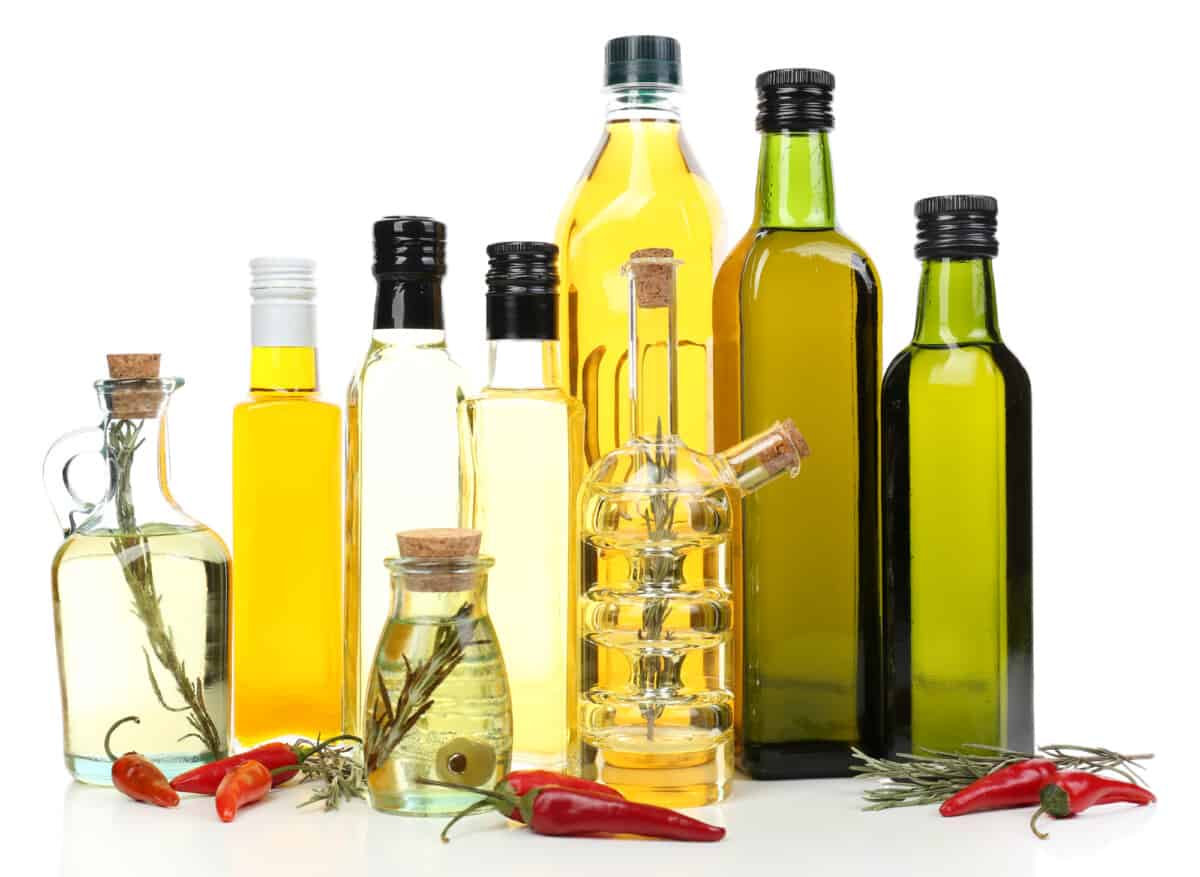
A seed oil is simply a cooking fat pressed or extracted from the seed of a plant rather than from its fruit. Olive oil comes from the fruit of the olive, avocado oil from the fruit of the avocado, so neither is a seed oil in the everyday sense.
The eight oils that dominate the online debate, sometimes called the “hateful eight,” are canola, corn, cottonseed, grapeseed, rice bran, safflower, soybean, and sunflower oil. Products sold as “vegetable oil” usually contain one or more of these.
What unites the group chemically is a high share of polyunsaturated fat, specifically linoleic acid, an omega-6 fatty acid. One important wrinkle: canola is the outlier. It is mostly monounsaturated fat, closer in profile to olive oil than to corn oil. Lumping all eight together is the first place the argument goes wrong.
Why do people say seed oils are bad?
The case against seed oils rests on three main arguments, and each deserves a fair hearing.
The first is the inflammation argument. Linoleic acid can be converted in the body to arachidonic acid, which is the raw material for signaling molecules called eicosanoids, some of which promote inflammation. Follow the arrows, the argument goes, and more seed oil means more inflammation, and chronic inflammation sits underneath heart disease, diabetes, and arthritis.
The second is the historical argument. Americans ate almost no soybean oil in 1900. By 2000, linoleic acid had climbed from roughly 3 percent of calories to about 7 percent, while obesity and type 2 diabetes rose over a similar period. The timeline is real, and it is persuasive in a 60-second video. Correlations across a century of changes in sugar intake, portion sizes, and screen time are weak evidence, but the timeline is real.
The third is the processing argument. Most supermarket seed oils are extracted with a solvent called hexane, then refined, bleached, and deodorized at high heat. Critics say this strips nutrients, leaves chemical residues, and creates damaged fats before the bottle is even opened.
Each argument contains a kernel of real biochemistry. Where they fail is the leap from “this can happen in a test tube or a rat” to “this does happen in a person eating a normal diet.”
Does omega-6 linoleic acid actually cause inflammation?
This is the core claim, and it is the one the trial data answers most clearly.
Yes, an enzyme pathway can turn linoleic acid into arachidonic acid. But that pathway is tightly rate-limited. When researchers have fed people diets ranging from low to very high in linoleic acid and then measured arachidonic acid in blood cells and tissues, the levels barely move. A 2011 review of these feeding studies found that even a six-fold change in linoleic intake produced no meaningful change in tissue arachidonic acid. The body, in effect, has a thermostat.
The more decisive test is to measure inflammation itself. A 2012 systematic review pulled together 15 randomized controlled trials in which healthy adults were given extra linoleic acid, in some cases several times the typical intake, and then had blood markers checked: C-reactive protein, interleukin-6, tumor necrosis factor, and others. Not one marker rose consistently. Randomized trials sit at the top of the evidence pyramid because randomization strips out the lifestyle differences that confound observational studies, so this is a strong finding, not a footnote.
There is another wrinkle that rarely makes it into the videos. Arachidonic acid also gives rise to molecules called lipoxins that actively resolve inflammation, and linoleic acid is itself an essential fatty acid. Without any of it, skin becomes scaly and wounds heal poorly. Labeling omega-6 as “pro-inflammatory” describes one branch of a tree while ignoring the rest.
What do randomized trials say about heart risk?
A 2020 Cochrane review, one of the most rigorous summary types in medicine, pooled 15 trials with roughly 59,000 participants. It found that cutting saturated fat, mostly by replacing it with polyunsaturated fat from vegetable oils, lowered combined cardiovascular events by about 17 percent over an average of four years. Effects on total mortality were not statistically clear, which is typical for trials of that length.
Beyond trials, a 2019 analysis in Circulation pooled 30 cohorts from 13 countries, about 68,000 people, and measured linoleic acid in blood or fat tissue. Those with the highest linoleic acid levels had modestly lower rates of cardiovascular disease and death than those with the lowest. And Johns Hopkins nutrition scientist Matti Marklund, who led that analysis, has said: “There is abundant evidence suggesting that seed oils are not bad for you. If anything, they are good for you.”
His team also found that participants with the highest linoleic acid levels had a 35 percent lower risk of developing type 2 diabetes compared to those with the lowest levels.
Then came the March 2025 analysis in JAMA Internal Medicine: 221,000 adults followed for over three decades across three long-running cohorts. Adults with the highest intake of plant-based oils had a total mortality rate about 16 percent lower than those with the lowest intake, while the highest butter consumers had a rate about 15 percent higher. The authors estimated that swapping roughly two teaspoons of butter a day for plant oils was associated with 17 percent fewer deaths overall and from cancer. Because this was observational, it shows association rather than proof of cause, but the direction runs opposite to the viral claims.
What about the two old trials critics keep citing?
Anyone who reads seed oil critiques closely will meet two names again and again: the Sydney Diet Heart Study and the Minnesota Coronary Experiment. Both were randomized trials, both replaced saturated fat with omega-6 oils, and both, on reanalysis, failed to show benefit. Honesty requires taking them seriously, and context requires explaining why they do not overturn the rest of the evidence.
The Sydney study ran from 1966 to 1973 in 458 men who had recently had a heart attack. The intervention group swapped animal fat for safflower oil and a safflower-based margarine. When the raw data were recovered and reanalyzed in 2013, the intervention group had higher death rates from heart disease. That sounds damning until you look at the margarine. Margarines of that era were made with partially hydrogenated oil, which is loaded with industrial trans fat, the one fat now removed from the US food supply because it so reliably raises heart risk. The trial could not separate the safflower oil from the trans fat it came packaged with.
The Minnesota Coronary Experiment, conducted from 1968 to 1973 in about 9,000 residents of state hospitals and nursing homes, replaced saturated fat with corn oil. A 2016 reanalysis found that cholesterol fell as expected but deaths did not, and in older participants a larger cholesterol drop tracked with higher mortality. The problems here are different: the average participant stayed in the study for roughly a year, three-quarters left early, and the population was elderly and institutionalized. A year is too short to change heart disease deaths in almost any trial, and cholesterol falling fastest in frail people who are losing weight because they are dying is a well-known statistical trap called reverse causation.
Two flawed trials from the 1960s do not outweigh a Cochrane review of 15 trials, 30 biomarker cohorts, and the modern consensus. They are the exceptions the critics have, understandably, mistaken for the rule.
Does the omega-6 to omega-3 ratio matter?
Some influencers claim our omega-6 intake far outweighs omega-3 and that we should aim for a 1:1 ratio like our ancestors supposedly had. The evidence does not support this. The American Heart Association’s 2009 science advisory, and most nutrition scientists since, concluded that cutting omega-6 to fix the ratio has never been shown to improve outcomes.
Stanford nutrition scientist Christopher Gardner, who served on the USDA’s Dietary Guidelines Advisory Committee, puts it this way: somewhere along the line, the fact that omega-6s do many of the same beneficial things omega-3s do, just less effectively, “got flipped into a misunderstanding” that omega-6s do the opposite of omega-3s.
The practical advice from researchers is not to reduce omega-6 but to add more omega-3: eat more fatty fish or walnuts. And one more fact that rarely makes the videos: canola oil is itself a good source of omega-3.

How are seed oils made, and is the processing a problem?
Most commercial seed oils are extracted with hexane, a petroleum-derived solvent, then refined, bleached, and deodorized. It sounds alarming on a video. In practice, the solvents used in refinement are not present in the final product that reaches shelves and do not pose health risks to consumers, according to Marklund. That is why they are affordable, shelf-stable, neutral in flavor, and have high smoke points.
If industrial processing bothers you on principle, cold-pressed or expeller-pressed versions of these oils exist. Just know they have a lower smoke point, so they are worse for high-heat cooking, not better.
When are seed oils actually a problem? Two honest caveats
The first caveat is reheated fryer oil. When cooking oil is repeatedly heated to high temperatures, it undergoes oxidation, hydrolysis, and polymerization, forming harmful compounds including aldehydes, polycyclic aromatic hydrocarbons, and lipid oxidation products. Animal studies link repeatedly heated oils to oxidative stress, inflammation, and genotoxic effects. In May 2024, the Indian Council of Medical Research issued guidelines warning against repeated heating of vegetable oils, noting the release of harmful compounds that raise risks for cardiovascular disease and cancer. This applies to all cooking oils, not just seed oils, and it matters most in commercial fryers where the same oil runs for hours. At home, the fix is simple: do not deep-fry in old oil, and discard oil that has gone dark or foamy.
The second caveat is ultra-processed food. Seed oils are ubiquitous in packaged foods, from salad dressings to frozen dinners, and their reputation has been tangled up with the unhealthy products they appear in. Bloomberg School researchers found that more than half of the calories US adults consume at home now come from ultra-processed foods. Those foods are high in sodium, added sugars, and additives, and low in fiber. That is what makes them bad for you, not the inclusion of seed oils.
The honest assessment
What the marketing claims: The wellness side says seed oils are toxic sludge driving inflammation, obesity, and chronic disease, and that you should replace them with butter, beef tallow, or coconut oil. The food industry side quietly treats seed oils as the default healthy choice in everything. The same fear-based playbook powers the detox industry, which is why we separately examined whether detox teas and cleanses do anything.
What the evidence actually says: Human trials and large cohorts show no inflammation signal, and replacing saturated fat with seed oils lowers cardiovascular events. No major medical body recommends avoiding seed oils. The two strongest-sounding trials against them are flawed in ways that explain their results.
Where the money incentives are: “Seed oil free” labels now sell at a premium, and beef tallow marketers have run well ahead of the evidence. Wellness influencers get millions of views from a scary, simple villain. The grain and food industry, meanwhile, has its own reasons to keep cheap oils in everything. Both camps are selling you something.
The plain-words verdict: Keep your canola and soybean oil. If you are swapping fats, plant oils remain a better bet than butter or tallow by the evidence. What is actually worth changing: eat less ultra-processed food, and do not reuse frying oil many times. If you are wondering where else your grocery money is best spent, here is the honest answer on whether organic food is healthier. If you want one change with strong support, add fatty fish to your week. The oil in your pantry is not the enemy.
Frequently asked questions
Should I throw out my canola oil?
There is no evidence-based reason to. Canola is mostly monounsaturated fat, closer to olive oil than to corn oil, and it is itself a source of omega-3. Keep using it, and keep it within its smoke point like any cooking fat.
Do seed oils cause inflammation?
In human trials, no. A systematic review of 15 randomized controlled trials found that even several times the typical intake of linoleic acid did not consistently raise any measured inflammatory marker.
Is butter or beef tallow healthier than seed oils?
The evidence says the opposite for heart health. Saturated fats from animal products raise LDL cholesterol, and swapping them for plant oils including canola, sunflower, and safflower lowers LDL, according to decades of data and the Dietary Guidelines for Americans.
What is the “hateful eight” list?
It is the list of eight oils the seed oil debate focuses on: canola, corn, cottonseed, grapeseed, rice bran, safflower, soybean, and sunflower. The name comes from social media, not from nutrition science.
Are cold-pressed seed oils healthier than refined ones?
There is no strong evidence of a health difference in normal use. Cold-pressed oils retain more flavor but have lower smoke points, so they are less suited to high-heat cooking.
Disclaimer
This article is general information, not medical advice. Everyone’s health situation is different, so talk to a qualified professional about personal health decisions.