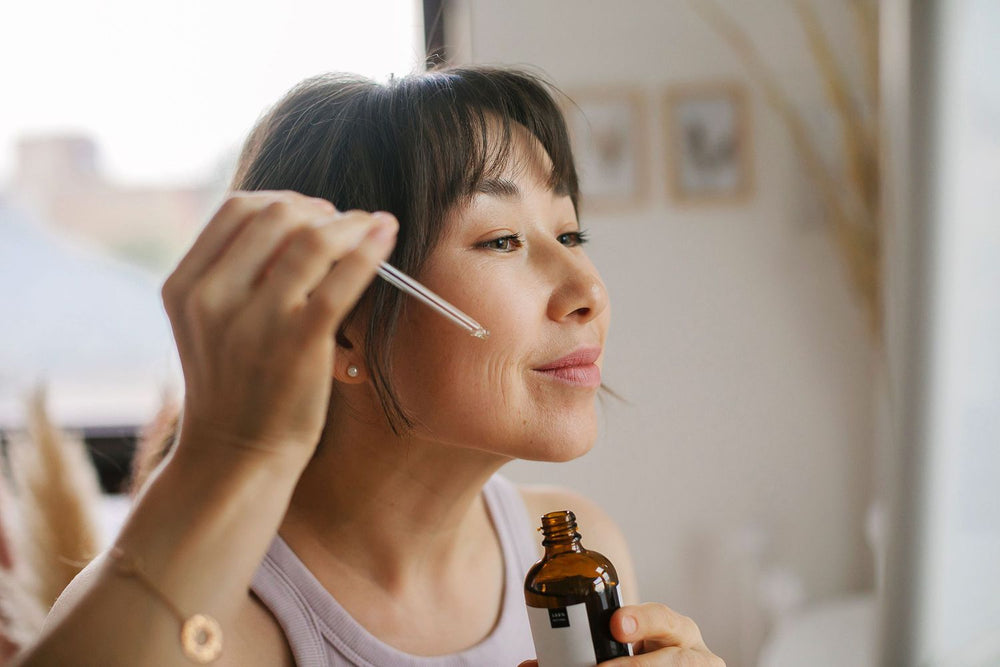
Yes, under the wrong conditions. Hyaluronic acid is a humectant, which means it pulls water toward itself like a sponge. Applied to damp skin in a humid room, it pulls moisture from the air and your skin’s surface into the top layer. Applied to dry skin in dry air, there is no surface moisture to pull, so it can pull water from the deeper layers of your skin instead, leaving your face feeling tighter and drier than before. “If your skin is dehydrated to begin with, and the air around you is dry, then the product can actually suck water from deeper in the skin,” says board-certified dermatologist Dr. Ava Shamban, speaking to Refinery29.
The good news: this is entirely avoidable. Two simple steps fix it: apply it to damp skin, and seal it with a moisturizer.
%%IMG:02-applying-serum-1.jpg%%
What is hyaluronic acid, and how does it actually work?
Hyaluronic acid is a complex sugar that your skin produces naturally, found between the collagen bundles where it provides hydration and plumpness. It is widely marketed as holding 1,000 times its weight in water, sometimes expressed as a single gram holding 6 litres. That figure has not survived contact with the lab: a 2024 analysis by chemists at the University of California, Riverside found no experimental support for the thousand-fold claim, with real water-binding far lower. Hyaluronic acid is still a good humectant, which is what actually matters on skin, but the famous number is marketing, not measurement. Your body makes less of it as you age, starting in your late twenties, and UV exposure speeds up its decline, which is part of why skin loses its bounce over time.
Topical hyaluronic acid works as a humectant: it draws water molecules toward itself and holds them in the skin’s top layer. The debate is about where that water comes from. Think of it like a sponge. A dry sponge on a wet surface absorbs water from the surface, which is great. A dry sponge in a dry room with no water source pulls whatever moisture it can find from whatever it is touching, including your skin. The molecule has not changed. The conditions have.
When does hyaluronic acid backfire?
Three conditions stack up to cause the problem. First, dry skin to begin with. Second, dry air: below about 40 percent relative humidity, high-molecular-weight hyaluronic acid applied to dry skin can draw moisture upward from deeper layers rather than pulling atmospheric moisture in. Third, no occlusive layer on top: without a moisturizer sealing it in, the water hyaluronic acid draws in can evaporate from the surface through transepidermal water loss, taking your skin’s own water along with it.
This combination is common. Heated indoor air in winter, air conditioning in summer, and long-haul flights all drop humidity below that threshold. And most people apply their serum to a fully dried face and stop there, using hyaluronic acid as a standalone moisturizer. That is the number one reason people experience the “HA dried me out” effect, and it is also why the viral claim that hyaluronic acid “always” dries out skin is an overstatement. In clinical studies under normal conditions, topical hyaluronic acid consistently improves skin hydration. The molecule is not the problem; the application is.
Does molecular weight matter?
Enormously, and it is one of the least discussed facts about the ingredient. Not all hyaluronic acid is the same.
- High molecular weight (1,000 to 1,800 kDa). Sits on the skin surface, forms a film, reduces transepidermal water loss, and provides immediate plumping. It cannot penetrate the skin, and it is the most prone to the drying effect in low humidity.
- Low molecular weight (10 to 50 kDa). Penetrates into the epidermis, delivers hydration deeper, and stimulates the skin’s own hyaluronic acid synthesis.
- Sodium hyaluronate (the salt form). A smaller molecule than standard hyaluronic acid, with better skin penetration. This is the most common form in serums.
- Hydrolysed hyaluronic acid. The smallest fragments, with the deepest penetration.
The best products use multiple molecular weights to address hydration at every layer at once. Most drugstore hyaluronic acid serums contain a single molecular weight, usually the high one for the immediate plumping effect, which misses the deeper hydration that low-molecular-weight fractions provide. When you compare labels, a multi-weight formula is one of the few genuine formulation differences worth noticing. That said, hyaluronic acid remains a hydration step, not a treatment: its effects are modest and temporary, and it is one of the clearest cases of a commodity ingredient sold at a luxury markup. Our pillar piece breaks down the broader picture of expensive vs drugstore skincare.
%%IMG:02-serum-dropper-2.webp%%
How should you apply it so it actually hydrates?
Apply to damp, not dry, skin. This is the single most repeated piece of dermatologist advice on the ingredient. “Hyaluronic acid should be applied after cleansing, whilst the skin is still damp, so it can lock in the moisture,” says Dr. Leah Totton. The skin does not need to be soaking wet, just slightly damp. Pat your face gently with a towel after cleansing, leaving it damp but not dripping, or let it air dry for a few seconds, then apply. Most dermatologists recommend getting the serum on within about 60 seconds of cleansing.
Use a thin layer. More hyaluronic acid is not better. Two to three drops or a pea-sized amount, spread evenly, is plenty. Thick application increases the risk of surface moisture draw in dry conditions and just feels tacky without improving results.
Seal it within a minute. Follow with an emollient moisturizer or facial oil to lock in the hydration. Hyaluronic acid draws and holds water, but without a layer on top, that water evaporates. Dr. Totton suggests waiting about a minute between steps so the skin has time to absorb each layer. Pairing with ceramides works especially well: ceramides protect the skin’s moisture barrier and prevent moisture loss.
Use it twice daily. Dr. Totton recommends hyaluronic acid as part of both the morning and evening routine for maximum benefit. In the morning, it creates a smooth canvas for makeup; at night, it reduces overnight water loss. In very dry climates, mist your face before applying and seal immediately with a richer occlusive.
Do not confuse it with an exfoliant. Despite the word “acid,” hyaluronic acid is not an exfoliator, and it should not be confused with niacinamide either, though the two offer similar nourishing benefits and work well together.
Always finish with SPF in the morning. UV degrades hyaluronic acid in the skin, so sun protection preserves what you have built.
Can hyaluronic acid help with other actives?
Yes, and this is one of its genuinely useful roles. Hyaluronic acid mitigates retinol dryness: apply the hyaluronic acid first, then the retinol, then moisturizer. It also pairs well with vitamin C and niacinamide. If you are starting retinol and worried about the adjustment period, our guide to retinol and barrier repair is worth reading alongside this one.
%%IMG:02-moisturizer-3.jpg%%
The honest assessment: marketing claims vs evidence vs money
What the marketing claims. Hyaluronic acid is sold as the ultimate hydrator: deep moisture, plumping, even wrinkle reversal. Luxury bottles imply a fundamentally better ingredient.
What the evidence actually says. Hyaluronic acid is a good humectant with a genuinely excellent safety profile: non-irritating, non-comedogenic, one of the safest choices for sensitive and reactive skin. Its effects are real but modest and temporary: it adds water to the top layer of skin and reduces water loss, especially in multi-weight formulas. It does not rebuild your skin’s structure. And yes, under dry conditions it can backfire, drawing moisture from deeper skin when applied wrong. Every part of that is preventable with damp-skin application and a moisturizer on top.
Where the money incentives are. Hyaluronic acid is a bulk commodity; the raw ingredient costs brands very little, which makes it a perfect vehicle for luxury markup. A pricey serum and a cheap one often contain near-identical actives, differing mostly in packaging and brand story. The one genuine formulation upgrade, multi-weight blends, is worth looking for, but it does not justify a luxury price on its own.
The plain-words verdict. Hyaluronic acid is worth using and almost never worth overpaying for. Apply it to damp skin, seal it with moisturizer, and it does its job. Apply it to dry skin in dry air with nothing on top, and it does the opposite.
FAQ
Can hyaluronic acid cause breakouts?
No. Hyaluronic acid is non-comedogenic and non-irritating; it does not clog pores or trigger acne. If someone breaks out after using a hyaluronic acid product, the culprit is almost certainly another ingredient in the formula, not the hyaluronic acid itself.
Should I use hyaluronic acid in winter?
Yes, but the application protocol matters most in winter. Heated indoor air drops humidity, which is exactly when hyaluronic acid can backfire. Apply to damp skin and seal immediately with a moisturizer or facial oil. If your skin still feels tight, mist your face before applying.
Is hyaluronic acid safe for sensitive skin?
It is one of the most recommended ingredients for sensitive and reactive skin because it is gentle and non-irritating. Stick to pure formulas without added fragrance, alcohol, or extra actives if your skin reacts easily.
Can I use hyaluronic acid with retinol?
Yes, and they work well together. Apply hyaluronic acid to damp skin first, then retinol, then moisturizer. The hyaluronic acid helps offset the dryness retinol can cause during the adjustment period.
Do I still need a moisturizer if I use hyaluronic acid?
Yes. Hyaluronic acid is a hydration step, not a complete moisturizer. It needs an emollient or occlusive on top to lock in the water it draws in. Skipping the moisturizer is the most common reason people feel drier after using it.
Disclaimer: This article is general information only, not medical advice. Skincare affects everyone differently, so talk to a qualified professional, such as a dermatologist, about personal health decisions.